DIRECTOR GUIDANCE • COMPANY DEBTS & INSOLVENCY
Company struggling with debt? What directors should do next
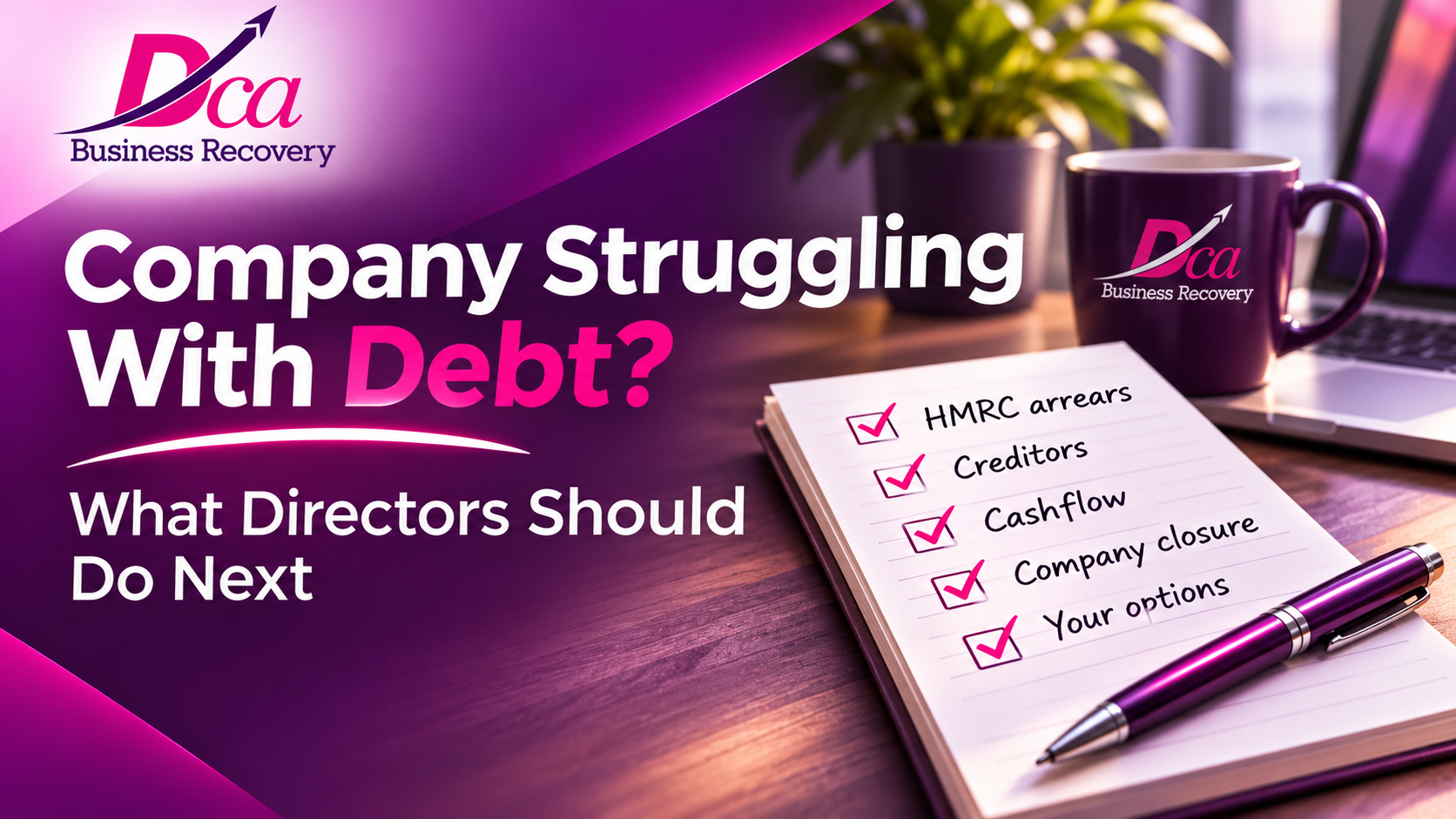
Is your company struggling with debt? Whether you are facing HMRC arrears, overdue suppliers, mounting bills or concerns about closing your limited company, this guide explains seven practical steps to help you understand your position, protect creditors and explore your options — without assuming liquidation is inevitable.
Recognising the warning signs
Company struggling with debt: how to recognise the warning signs
Many directors first notice a problem when the business is still trading: a VAT payment is missed, a supplier asks for payment up front or there is not enough cash for the next payroll. A single difficult month does not necessarily mean the company must close. However, persistent pressure is a reason to review the position promptly.
A company may be insolvent if it cannot pay debts as they fall due or if its liabilities exceed its assets. Those tests are important, but understanding the facts and available options requires more than looking at one bank balance. The Insolvency Service recommends seeking professional advice where a company’s position is uncertain.
Common warning signs: unpaid VAT, PAYE or Corporation Tax; overdue rent or suppliers; reliance on overdrafts; repeated missed payment arrangements; unpaid wages; and creditors threatening legal action.
Directors sometimes delay getting help because they think speaking to an insolvency practitioner means agreeing to liquidation. It does not. A sensible first conversation should establish whether the business can recover, needs a formal arrangement or should consider an orderly closure.
A practical starting point
Seven practical steps when your company cannot pay its debts
Make a realistic cash-flow forecast
List money expected in and essential payments due over the next few weeks. Distinguish confirmed income from hoped-for sales. This helps identify whether the difficulty is temporary or more serious.
Build a complete list of creditors
Include HMRC, lenders, landlords, suppliers, employees and any disputed balances. Record arrears, payment deadlines, guarantees and enforcement correspondence.
Check the company’s assets and liabilities
Review the latest accounts, bank balances, stock, vehicles, unpaid invoices and finance agreements. Consider whether assets are secured or subject to third-party rights.
Understand your duties as a director
Where insolvency is present or likely, creditor interests become particularly important. Avoid decisions that could unfairly benefit directors, connected parties or selected creditors at the expense of others.
Take enforcement letters seriously
HMRC demands, statutory demands, county court judgments and winding-up petitions require attention. Deadlines and the right response depend on the particular document and circumstances.
Consider whether the business is viable
Could a realistic payment plan, refinancing, operational changes or a restructuring proposal resolve the position? If not, continuing to incur debt may make matters worse.
Get advice before committing to a route
If your company is struggling with debt, talk through its circumstances with a qualified adviser. You should understand the alternatives, likely costs and implications before making a decision.
Understanding your options
Does a company with debts have to go into liquidation?
Not necessarily. The right approach depends on the company’s finances, whether its underlying business is viable and what creditors are likely to accept. Even where a company is struggling with debt, some businesses can be rescued; others need an orderly closure.
Administration, refinancing and other restructuring tools may also be relevant in some cases. A director should not assume that one route suits every business.
Avoid making a difficult position worse
Common mistakes directors should avoid
Ignoring HMRC or creditors: letters and deadlines do not disappear if they are left unanswered. Where enforcement has started, obtain advice promptly rather than waiting for the next letter.
Paying yourself or connected parties first: payments to directors, family members or connected businesses can attract scrutiny when the company is insolvent. Take advice before making unusual payments or disposing of assets.
Assuming every company debt is personal: directors are not normally personally responsible for ordinary limited-company debts, but guarantees and certain legal exceptions can change the position. Check the documents and obtain advice.
Applying for strike-off without understanding the rules: Companies House imposes eligibility and notification requirements. Creditors can object, and dissolution does not necessarily prevent later investigation or restoration.
Our approach at DCA: We will explain the available options in plain English and tell you if liquidation does not appear necessary. The aim is to help you make an informed decision, not to push you into a particular process.
How DCA’s online journey works
What happens when you request your free company advice guide?
Find your company
Begin with the secure company lookup and confirm the relevant Companies House details.
Tell us what is happening
Answer straightforward questions about your company’s position and the concerns that brought you here.
Verify your email
Complete the verification step so the enquiry and guide can be accessed securely.
Read your preliminary guide
Receive guidance informed by your answers, with an opportunity to explore next steps with the DCA team.
The guide is a starting point, not a formal insolvency assessment or a replacement for advice tailored to the full facts. You do not need to know whether your company requires a CVL, CVA, strike-off or something else before you begin.
Frequently asked questions
Company debt advice: questions directors often ask
What should I do first if my limited company cannot pay its bills?
Prepare a realistic picture of cash flow, creditors and assets, preserve records and obtain professional advice promptly. The right next step depends on whether the business can recover and whether insolvency duties are engaged.
Can I close a company that owes HMRC money?
Potentially, but the correct process depends on the company’s solvency and circumstances. An insolvent company may require a formal process such as CVL. Strike-off is subject to Companies House rules and is not a way to avoid dealing with creditors.
Will I personally have to pay my limited company’s debts?
Not normally for ordinary company liabilities solely because you are a director. However, personal guarantees, certain tax provisions or misconduct-related claims can create personal exposure. Review any guarantees and seek advice on your particular position.
Is liquidation always necessary if a company has debts?
No. A viable business may be able to negotiate with creditors, arrange funding or explore a formal restructuring solution. Where continued trading is not viable, liquidation may be appropriate.
Is DCA’s personalised PDF guide free?
Yes, the online journey is free to begin and there is no obligation to proceed. After answering questions and verifying your email, you can access a preliminary guide informed by the information you provide.
Do I have to telephone DCA to start?
No. You can begin the secure online journey without making a call. If further advice would help, you can then explore the next steps with our team.