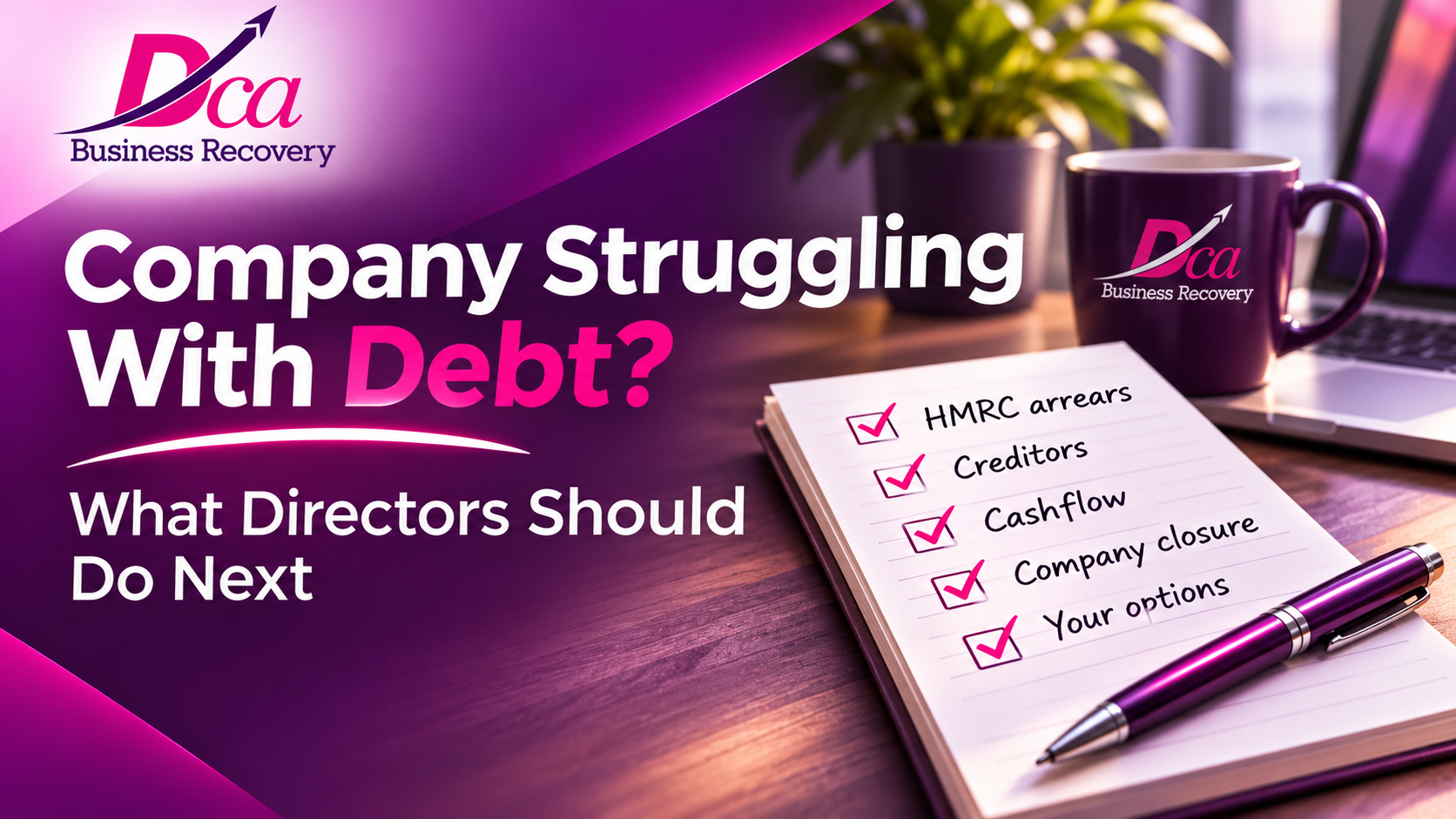
HMRC tax debt reaches £43.8 billion: what it means for UK businesses
A new National Audit Office report highlights a growing problem with older tax debts. For company directors struggling with VAT, PAYE or Corporation Tax, the important question is what to do next.
DCA Business Recovery | 26 October 2026 | 5-minute read
What has the National Audit Office found?
The National Audit Office (NAO) published its report on HMRC’s management of tax debt on 23 October 2026. It found that taxpayers owed £43.8 billion in overdue tax at the end of the 2025/26 financial year.
The report also highlights the difficulty of collecting older arrears. Around half of the outstanding balance is more than a year old, while HMRC estimates that 46% of the debt may ultimately go uncollected.
Important context: The £43.8 billion figure covers tax debt owed by individuals and businesses across the UK, not just limited companies. The 46% figure is HMRC’s estimate of potential non-recovery; it does not mean that those debts have been written off or that HMRC will stop pursuing them.
There is also some progress: tax debt has fallen from 5.6% of annual tax receipts in 2022/23 to 4.7% in 2025/26. However, the amount of old debt remains a significant challenge for HMRC.
Why does this matter to company directors?
For many businesses, tax arrears begin as a temporary cash-flow problem. A VAT payment is delayed, PAYE falls behind, or Corporation Tax becomes due at a difficult time. If trading does not improve, those liabilities can build quickly.
Trading can recover
Where the company has reliable future cash flow, early engagement with HMRC and a realistic repayment proposal may help. Directors also need to budget for tax becoming due while existing arrears are repaid.
Debts keep increasing
Where the company cannot meet debts as they fall due and has no credible route to recovery, continuing to trade without taking advice may increase losses and expose directors to additional risks.
The NAO report is not itself a new insolvency law or an announcement of new HMRC enforcement powers. It does, however, underline why outstanding tax liabilities deserve early attention.
What can HMRC do if your company does not pay?
HMRC says it normally seeks to contact taxpayers and establish a way forward. Where debts remain unpaid and no satisfactory arrangement is agreed, the action available will depend on the circumstances.
| Possible action | What it means for a company |
|---|---|
| Contact and payment requests | Letters, calls or visits may be used to seek payment and understand the company’s position. |
| Time to Pay discussions | HMRC may consider instalments if the proposal is realistic and affordable. Approval is not automatic. |
| Debt collection or enforcement | Depending on the facts, HMRC may use collection agencies and available enforcement powers. |
| Winding-up proceedings | For an unpaid business tax debt, HMRC may petition the court to wind up a company. This is a serious stage requiring urgent advice. |
HMRC’s own guidance confirms that it can seek to wind up a company that owes business taxes. But a missed payment does not mean a winding-up petition is inevitable.
For a detailed explanation, read our HMRC debt advice for limited companies.
Can a business arrange a Time to Pay agreement?
Potentially. A Time to Pay (TTP) arrangement can allow overdue tax to be repaid in instalments, but HMRC will assess the company’s finances, the amount owed and whether the proposal is affordable and credible.
List VAT, PAYE, National Insurance, Corporation Tax and other liabilities, alongside any other creditors and cash available.
Show how ongoing trading costs, new tax liabilities and the proposed instalments can all be met.
Contact HMRC promptly and take independent advice if the figures do not support a sustainable payment arrangement.
HMRC may ask about the company’s income, spending and assets, and expects arrears to be reduced as much as reasonably possible. Do not promise instalments the company cannot afford merely to delay enforcement.
What if HMRC refuses a payment arrangement?
If HMRC will not accept a proposed plan, it does not automatically follow that the company must liquidate. The next step depends on whether the business remains viable and what options are realistically available.
Review rescue options
Where trading is fundamentally viable, directors might consider revised negotiations, refinancing, restructuring or a formal arrangement, depending on the circumstances and creditor position.
Consider a CVL
Where the company is insolvent and cannot reasonably recover, a Creditors’ Voluntary Liquidation may be an appropriate way to bring the company’s affairs to an orderly conclusion.
Owing HMRC money does not, in itself, prevent a company from entering a CVL. However, the treatment of director loans, company assets, transactions and potential personal liabilities should be considered carefully.
You can also read our guide: Can HMRC chase a company director personally?
Five practical steps if your company owes HMRC
- Do not ignore HMRC correspondence. Check the amount, the relevant taxes and any payment or court deadlines.
- Update the company cash flow. Include wages, rent, suppliers, other creditors and forthcoming tax liabilities.
- Keep accounting records up to date. Directors should understand the company’s position and keep proper evidence of decisions.
- Avoid moving or disposing of assets without appropriate advice. Transactions and payments made when a company is insolvent can require later scrutiny.
- Take professional advice early. Waiting until a winding-up petition is presented can restrict the options available.
For accountants and bookkeepers: A client who is repeatedly funding trading with unpaid VAT or PAYE may need wider insolvency advice, not simply another short-term payment arrangement.
Frequently asked questions
Does the £43.8 billion figure mean HMRC is writing off tax debts?
No. It is the amount of overdue tax outstanding at 31 March 2026. HMRC’s separate 46% figure is an estimate of debt that might not ultimately be recovered, not an announcement that taxpayers can stop paying.
Can HMRC wind up my limited company over unpaid VAT or PAYE?
Yes. HMRC is a creditor and can seek compulsory liquidation through a winding-up petition where the relevant legal conditions are met. If you have received a petition or formal warning, obtain urgent advice.
Is HMRC required to accept a Time to Pay proposal?
No. HMRC assesses the company’s financial position and whether the offer is realistic and affordable. An arrangement should account for future tax bills as well as arrears.
Can I put a company into liquidation if it owes HMRC?
Yes, where appropriate. An insolvent company may enter a Creditors’ Voluntary Liquidation even if HMRC is a significant creditor. The circumstances and directors’ conduct should be reviewed before proceeding.
Will I personally owe my company’s HMRC debt?
Not automatically. A limited company generally owes its own tax debts. There are exceptions and potential claims in particular circumstances, including certain statutory personal liability provisions or issues arising from directors’ conduct. The position depends on the facts.
Struggling with HMRC arrears? Speak to DCA.
If your company is behind with VAT, PAYE or Corporation Tax, we can talk through the position and explain the options clearly. DCA Business Recovery is a family-run insolvency practice offering confidential, no-pressure initial advice.
Official sources and further reading
This article is general information for UK businesses, correct at the date of publication, and is not specific legal or financial advice. Figures refer to the NAO’s assessment of tax debt at 31 March 2026; they should not be read as the live balance on the publication date. Insolvency options depend on the company’s circumstances.